C-DRONE GUIDE · 13 JULY 2026
Checking a roof before buying a house: the drone inspection
A roof at the end of its life can cost €15,000 to €60,000 to replace — and none of the mandatory surveys handed to a French homebuyer says a word about it. For a few hundred euros, a drone inspection removes the doubt before you sign, and becomes a formidable negotiating lever. Here is how to fit it into your purchase, at the right moment.
The roof, the number-one source of nasty surprises
In post-purchase disputes and regrets, the roof sits at the top of the list, for a simple reason: it is at once the costliest work item in an older house and the least visible during viewings. A complete replacement costs €150 to €300 per m² depending on the material — €15,000 to €35,000 for an ordinary house, and much more if the timber frame is affected or slate is required. Even a partial repair (ridge, flashing, chimney junctions) quickly reaches several thousand euros.
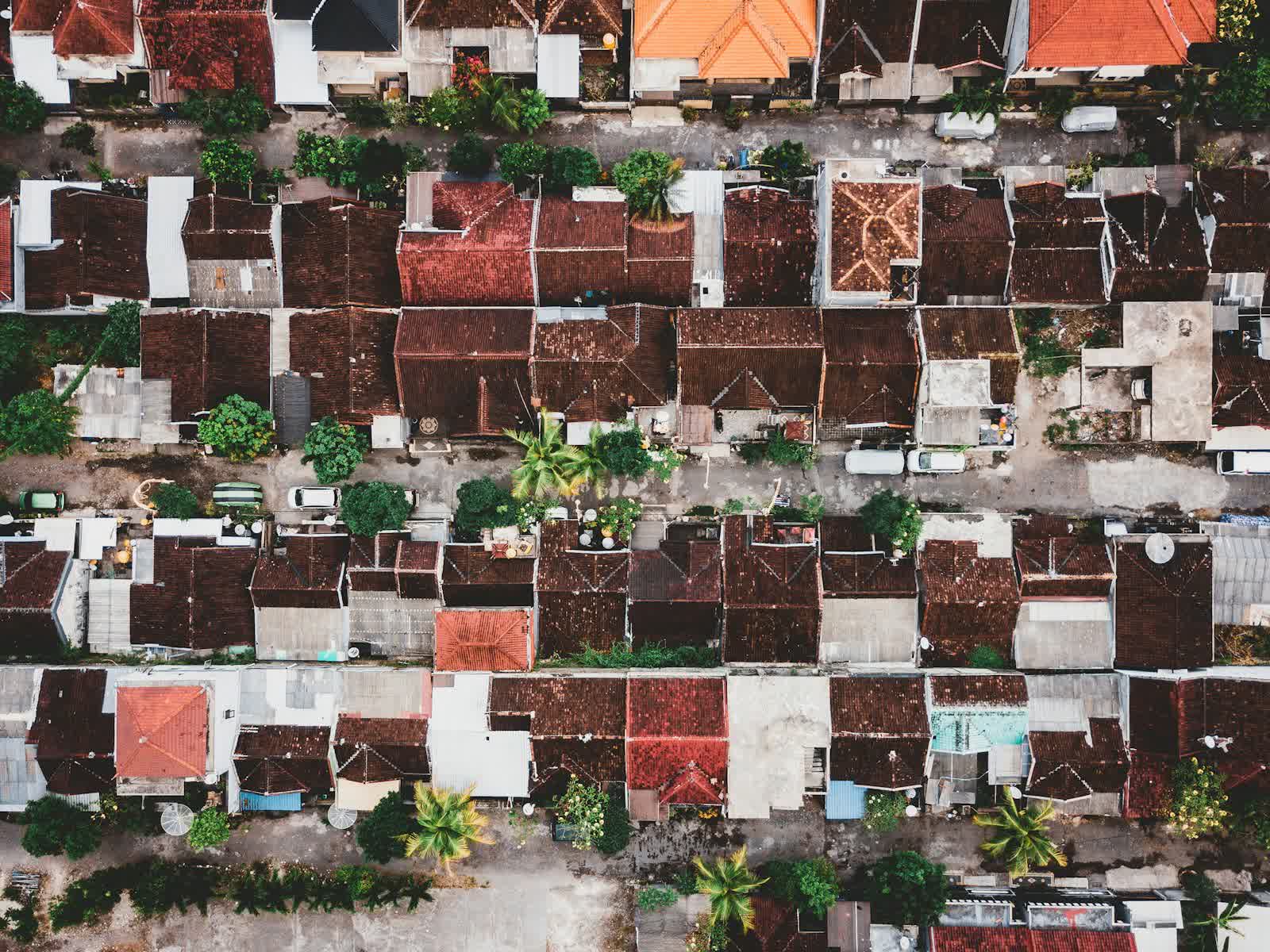
Yet buyers tour a house rarely looking higher than the ceilings. From the street you glimpse one slope out of four, from below, 15 m away: impossible to assess the real condition of the tiles, the flatness of the covering (a ripple betrays a sagging frame), the state of the valleys and junctions. The seller often genuinely does not know either. Yet the rule in French law is clear: apparent defects the buyer could have observed give no recourse after the sale. Better to observe them before — and that is exactly what the drone makes possible.
What the mandatory survey file does not tell you
The technical survey file (DDT) handed to every French buyer is thick: energy rating, asbestos, lead, termites, electrics, gas, drainage, natural risks… But none of these mandatory surveys covers the condition of the roof covering, the flashing or the visible timber frame. The termite survey concerns wood, not watertightness; the energy rating assesses insulation, not tiles. In other words, the most comprehensive document in the sale file is silent on what is potentially the heaviest work item.
Post-sale remedies are narrow. The hidden-defects warranty requires proving a defect that pre-dates the sale, was not apparent and makes the property unfit for its purpose — a long, costly and uncertain procedure, usually blocked by the hidden-defects exclusion clause found in almost every private sale agreement. The practical conclusion imposes itself: on the roof, buyers can only rely on their own verification, before committing. A €200-450 drone inspection is, relative to the stakes, one of the most cost-effective checks in the entire buying process.
How the pre-purchase inspection works
In practice, the inspection requires the selling owner's consent — the pilot takes off from the plot and flies over a property that is not yet yours. That consent is obtained without difficulty in the vast majority of cases, directly or through the estate agent: an unexplained refusal would in itself be an interesting piece of information. On site, the flight lasts 20 to 40 minutes: top-down views of the whole roof, oblique passes over each slope, zoomed close-ups on the singular points — ridge, valleys, flashing, verges, chimney stacks, gutters, solar panels where present.
You then receive an annotated photographic report, generally within 3 to 5 days (72 h express, useful when the sale agreement is close): every defect is located, described and ranked — routine maintenance (moss, a few tiles to refix), work to schedule (tired flashing, ridge to repoint), or a heavy warning (covering at end of life, sagging). Optionally, a thermal pass can complete the examination to detect already-active water ingress. On choosing the method and its limits versus hands-on examination, our comparison drone or cherry picker for roof inspection covers the question in full.
Inspection price — and the negotiating return on investment
2026 prices for a pre-purchase roof inspection:
| Service | Indicative price (incl. VAT) | Use |
|---|---|---|
| Visual check (annotated photos) | €150 – €300 | Recent house, mild doubt |
| Full inspection with annotated report | €200 – €450 | The pre-purchase standard |
| Inspection + thermography | €450 – €800 | Suspected water ingress, flat roof |
| Follow-up visit after a roofer's quote | €100 – €200 | Verifying the real extent of announced works |
The return on investment shows at the negotiating table. An objective, quantifiable report — "ridge to repair, flashing at end of life: roofer's quote €8,500" — is an argument the seller can hardly wave away, because it is factual, dated and verifiable. A price reduction of several thousand euros, or the seller taking on the works, is regularly negotiated on this basis: the €300 report pays for itself ten to fifty times over. And if the roof is sound, you buy with peace of mind — which also has a price. To request a quote, see our drone roof inspection page.
When to schedule it in the buying process
The ideal moment is before the purchase offer: you then negotiate in full knowledge, and the inspection's cost stays marginal against the stakes. Failing that, the next window is between the accepted offer and the signing of the sale agreement — often when the diary allows it, the property being "reserved". The last safety net: the 10-day withdrawal period French buyers enjoy after signing the agreement (SRU law). An express inspection with a report within 72 h fits comfortably inside it, and a major bad surprise still lets you walk away without penalty or justification.
You can also have a dedicated condition precedent inserted in the sale agreement (an inspection report revealing no major defect, or a repair quote below a ceiling amount): notaries draft it routinely, as they do for a mortgage or planning permission. A final word for sellers, symmetrically: having your roof inspected before listing and attaching the report to the file disarms the negotiation instead of enduring it — a transparency logic that echoes our guide to selling a property with aerial views.
Frequently asked questions before buying
Can the seller refuse the inspection? Yes: overflying their property requires their consent. But a refusal without serious grounds, when the process is non-intrusive and free for them, should alert you — at the very least, draw the consequences in your price offer.
Does the drone inspection replace a roofer's opinion? No, it precedes and feeds it. The drone records everything exhaustively and without risk; the roofer interprets, probes hands-on if needed, and prices. The drone report + roofer's quote duo is the strongest combination for negotiating.
What about a flat in a co-owned building? The roof is a common part: major works will be paid through service charges, in proportion to your share. Read the general-meeting minutes and the multi-year works plan; a drone inspection of the building can be suggested to the managing agent, but the commissioning is theirs.
How much time should you allow? Expect 3 to 10 days between first contact and the report (visit included), and 72 h on the express formula — comfortably compatible with the 10-day withdrawal period.