C-DRONE GUIDE · 21 MAY 2026
Thermal drone: which model for inspection work in 2026
Not all "thermal drones" are equal, and the first criterion is neither the brand nor the price: it is radiometry. Between a camera that produces a pretty coloured image and one that actually measures a temperature in every pixel lies the difference between a gadget and an inspection tool. Here is how to read a spec sheet and which model to choose for your missions in 2026.
Radiometric or not: the make-or-break criterion
This is the market's number-one trap. A non-radiometric thermal camera renders a false-colour image where red is "warmer" than blue, but with no temperature value attached to the pixels. With it, you cannot tell whether a hot spot on a solar panel is at 45°C (normal in full sun) or 90°C (a serious diode fault), nor produce a report an engineering firm or an insurer can use. A radiometric camera records the temperature of every pixel in the file (R-JPEG format on DJI machines), letting you adjust emissivity, reflected temperature and alert thresholds after the flight, then annotate the images in analysis software.
For any inspection activity — buildings, solar farms, networks, leak detection — radiometry is therefore non-negotiable. It explains the price gap between a consumer "thermal vision" drone sold under €3,000 and a genuine professional tool. If the spec sheet does not explicitly mention "radiometric" or per-pixel temperature recording, walk away: you would be buying a thermometer that cannot give a temperature.
640×512 resolution and NETD: reading a spec sheet
Two figures sum up a thermal sensor's quality. Resolution first: 640×512 pixels is the professional standard in 2026. Below that (256×192, 320×256), you must fly very close to the subject to resolve a defect, which lengthens flights and degrades safety; above it (1280×1024 on high-end payloads), you cover large areas faster at the same level of detail. The practical rule: to measure an object correctly, it must span at least 3×3 pixels in the image — with a 640×512 sensor and a standard lens, that allows roughly twice the distance of a 320×256.
NETD (Noise Equivalent Temperature Difference) then measures thermal sensitivity: the smallest temperature difference the sensor can distinguish from noise. Expressed in millikelvins, it should be at or below 50 mK for professional use; the best cameras reach 30 mK and reveal insulation defects or water ingress that noisier sensors drown in grain. Complete the analysis with the measurement range (ideally -20°C to +550°C with a high-temperature mode), the frame rate (30 Hz rather than 8-9 Hz) and the presence of a usable thermal digital zoom.
The 2026 comparison: five machines that dominate the market
The thermal drone inspection market has consolidated around a few proven platforms. Here are the 2026 references, with indicative prices excluding VAT as observed in France (camera payload included, extra batteries and options excluded):
| Model | Thermal sensor | NETD | Strengths | Indicative price (excl. VAT) |
|---|---|---|---|---|
| DJI Mavic 3T | 640×512 radiometric | ≤ 50 mK | Compact, 56× zoom, pro entry ticket | €4,500 – €5,500 |
| DJI Matrice 4T | 640×512 radiometric | ≤ 50 mK | Latest sensors, assisted detection, endurance | €10,000 – €13,000 |
| DJI Matrice 30T | 640×512 radiometric | ≤ 50 mK | IP55, flies in rain, laser rangefinder | €9,000 – €12,000 |
| Autel EVO Max 4T | 640×512 radiometric | ≤ 50 mK | Non-DJI alternative, good endurance | €8,000 – €10,000 |
| DJI Matrice 350 RTK + Zenmuse H30T | 1280×1024 radiometric | ≤ 50 mK | The reference for large solar farms and industry | €25,000 – €35,000 |
The Mavic 3T remains the best value to start in building inspection; the Matrice 30T takes over as soon as you work in all weathers; the M350 + H30T pairing is only justified on large industrial and solar contracts.
Which model for which mission
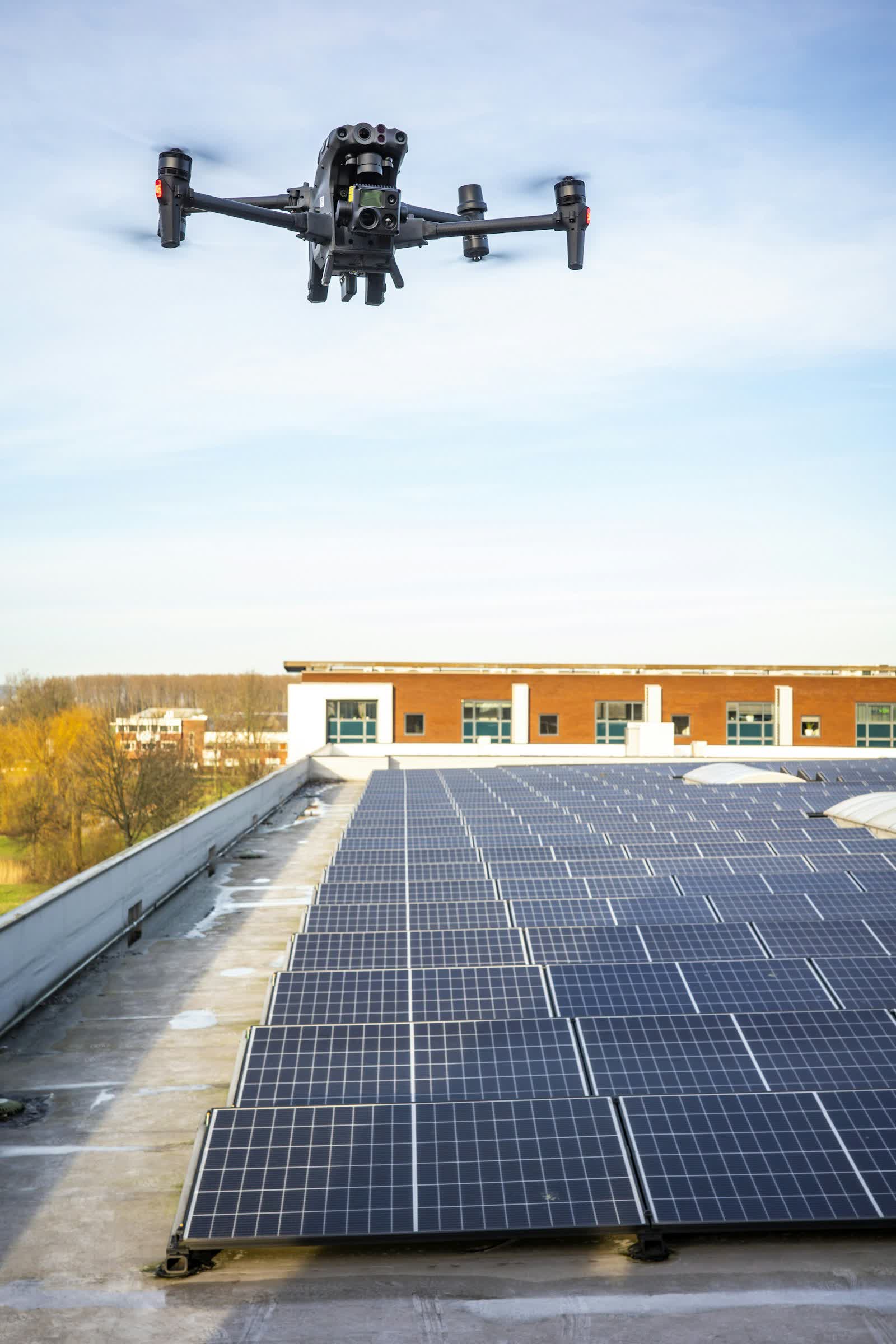
For building thermography — heat loss, water ingress, flat roofs, co-owned buildings — a Mavic 3T or a Matrice 4T is largely sufficient: areas are modest, you fly close, and compactness makes take-offs easier in dense urban areas. For solar auditing, it all depends on scale: a farm-shed roof is handled with a Mavic 3T, but a ground-mounted plant of several hectares, audited to the IEC 62446-3 standard, demands a high-resolution sensor and programmed flights — the territory of the M30T and M350. Inspection is ideally carried out with irradiance above 600 W/m², which makes summer the high season.
For wildlife searches (saving fawns before mowing, lost animals), sensitivity matters more than resolution: you fly at dawn when thermal contrast peaks, and a 640×512 sensor at 50 mK does the job perfectly. For industry and networks (flare stacks, power lines, chimneys), the high-temperature mode and optical zoom become decisive — you do not fly close to a flare stack. Finally, do not forget the software line: DJI Thermal Analysis Tool is free and fine to start with, while dedicated analysis and reporting suites (standards-compliant reports, tracking over time) cost €500 to €2,000 per year.
Buy or subcontract: the honest calculation
The full budget of a drone thermography activity goes far beyond the machine's price: expect €5,000 to €13,000 of equipment to start seriously, €1,500 to €3,500 of pilot training, €1,000 to €3,000 of thermographer training (essential: the camera measures, but a human interprets emissivity, reflections and thermal bridges), plus insurance and software. That is €10,000 to €20,000 in year one. On the other side of the ledger, a building thermal inspection bills at €450 to €800 and a solar audit from €750 (small installation ≤ 100 kWp) to €12,000 (large plant): the investment only pays off with a steady flow of missions.
If your need is one-off — an audit of your building, checking a suspect roof — subcontracting is unquestionably the right option: see our drone thermography page to request a quote. If you are a pilot still hesitating over the machine, our guide which professional drone to buy broadens the comparison beyond thermal, and our guide on thermography for energy renovation details the building-side methodology.
Frequently asked questions about thermal drones
Is there a cheap thermal drone worth buying? Under €3,000, cameras are almost always non-radiometric or limited to 256×192: enough to find an animal, not enough for an inspection report. The real professional entry ticket sits around €4,500 with the Mavic 3T.
What is the best season for thermography? For buildings, the heating season (November to March) with an indoor-outdoor difference of at least 10°C, early in the morning and without direct sun. For solar, it is the opposite: high summer, strong irradiance — defects heat up.
Do you need a certification to sell thermography? None is legally required, but certified thermographer training is a decisive commercial argument and a frequent requirement of B2B clients — and it prevents the interpretation errors that engage your liability.
Mavic 3T or Matrice 4T? Same thermal resolution, but the Matrice 4T adds better visual sensors, a rangefinder, longer endurance and assisted-inspection features. If the budget allows and inspection is your core business, the price gap is justified; for occasional use, the 3T is enough.