C-DRONE GUIDE · 6 JULY 2026
Finding a lost pet with a thermal drone
A dog bolting after an accident, a cat that never comes home, an animal panicked by a storm or fireworks: every year, tens of thousands of families live through these hours of anguish. Drones fitted with thermal cameras have changed the game: they sweep in one hour what a search party covers in a day, and see into brambles, fields and half-light what no human eye can. Here is how these searches work, who to contact and what they cost.
Why thermal drones succeed where search parties fail
Searching for a lost animal on foot runs into three walls. Area, first: a panicked dog can cover several kilometres in an hour; the zone to search quickly runs into hundreds of hectares, beyond any group of volunteers. Visibility, second: an animal holed up in brambles, a ditch or a maize field is invisible from three metres. Behaviour, finally — and this is the cruellest trap: a stressed animal hides, including from its own owners, and a noisy search party can drive it even further away.
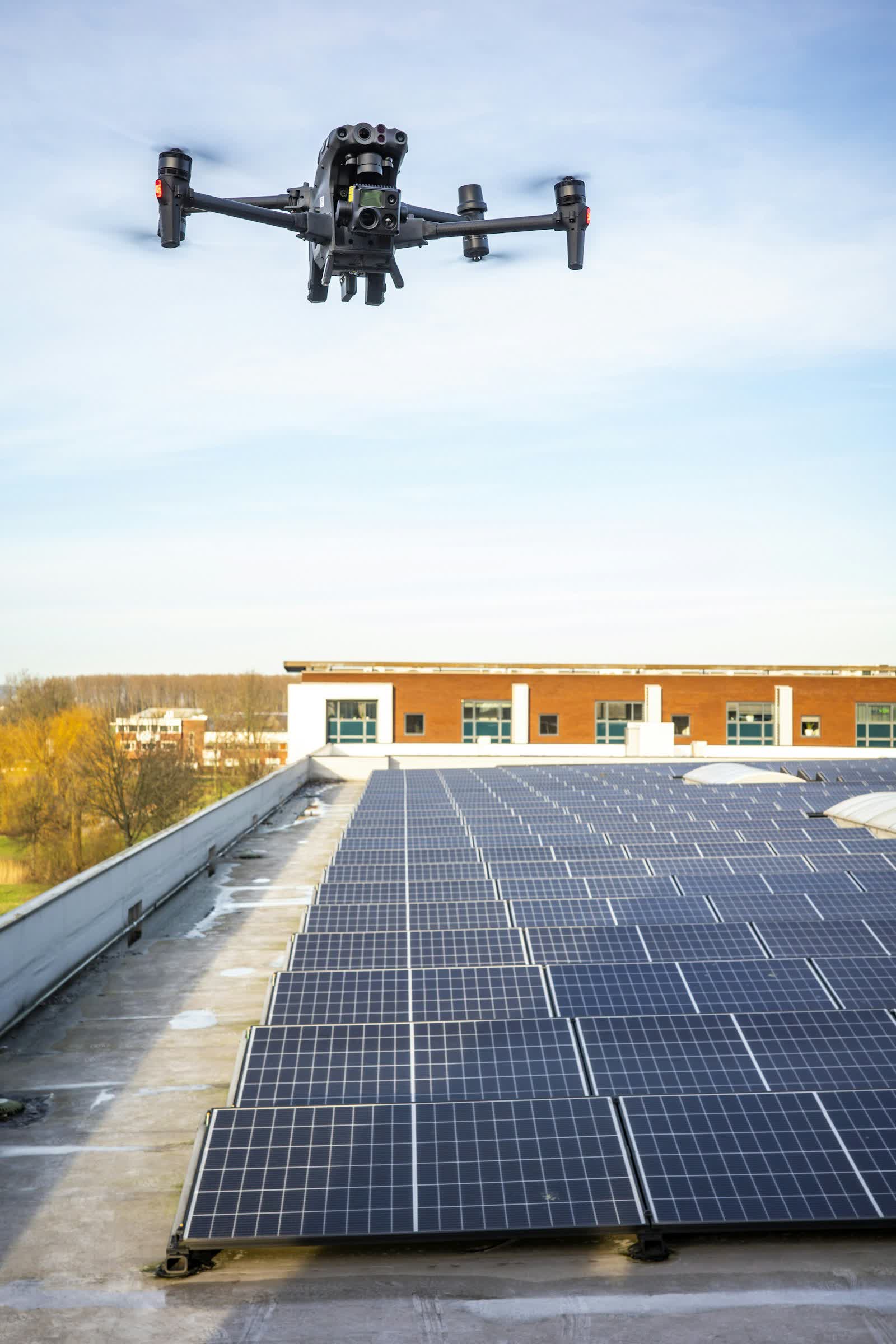
The thermal drone overturns all three obstacles at once. At 60 m, it covers 10 hectares in about ten minutes, in a methodical sweep nothing interrupts. Its camera looks not for a silhouette but for a heat signature: the 38°C body of a dog or cat stands out against cool ground, even under partial vegetation cover. And it operates in relative silence, at a height that does not frighten the animal — you locate first, then approach, gently, and only with the right people. The same teams and equipment that save fawns before mowing in spring find lost pets all year round: the technique is identical, only the target changes.
Dog or cat: two behaviours, two search strategies
A lost dog is an animal on the move. Depending on temperament, it either roams seeking contact or flees in a straight line in a panic state where it no longer recognises anyone — typical after a road accident or fireworks. The drone strategy is to define sectors from the latest sightings (hence the capital importance of local social networks and Pet-Alert-type apps) and sweep them systematically, starting with natural escape corridors: woodland edges, paths, watercourses, railway lines. Dog searches run at any hour, with a clear advantage at dawn and dusk, when thermal contrast peaks and the animal moves.
The cat is the exact opposite: in 90% of cases it does not leave — it goes to ground. An escaped indoor cat hides within 50 to 300 m of home, petrified, often for days, not answering calls. The search is therefore surgical: a slow, low sweep of neighbouring gardens (with the neighbours' consent), hedges, under decks and outbuilding roofs, preferably at nightfall or dawn once tiles and slabs have cooled. Thermal excels here, with one caveat: a cat under a roof or inside a garage is invisible from the sky — the drone rules out the open areas and focuses the human search on the remaining enclosed hiding spots, which is already a decisive gain.
How a search unfolds: from the call to the fix
A serious intervention starts with a precise phone debrief: how long has the animal been missing, in what circumstances (panicked bolt or gradual disappearance), what is its temperament, where were the last reliable sightings? The answers determine the initial search zone and the flight slot. The operator then checks the area's airspace constraints — maximum heights, aerodrome proximity, built-up areas — and plans grid flights, sector by sector, keeping a live map of covered zones so the same spot is never searched twice.
On site, the golden rule is counter-intuitive: the owners stay back during the flight. When a hot spot is detected, the pilot holds the drone at a distance, zooms in with the visible camera to confirm identification — this is where false hopes happen: roe deer, foxes and the neighbourhood's cats populate thermal screens — then passes on the GPS position. The final approach is on foot, calmly, by a single person the animal knows, with food, and without calling out if the animal is in panic mode. A cat search in a residential area takes one to two hours; a dog search based on sightings can take several sessions over two or three days, updating the sectors with every new report.
Who to call and what it costs in 2026
Three families of responders coexist. Volunteers and animal-search associations, organised in regional networks and often born out of fawn-rescue operations: they intervene for free or for expenses, but their schedules fill up fast. Professional drone pilots offering pet search among their services, with a professional's responsiveness during working hours. And a few specialist outfits that do nothing else, equipped with high-grade thermal-zoom drones and versed in animal behaviour. Observed ranges:
| Responder | Observed cost |
|---|---|
| Association / equipped volunteer | Free to €80 in expenses |
| Professional pilot, local intervention (1–2 h of flight) | €150 – €350 |
| Extended search (half-day, several sectors) | €300 – €600 |
| Multi-day follow-up with repeated sessions | On quote, generally €500 – €1,200 |
Beware of promised results: an honest operator sells methodical coverage and a probability, never a certainty. Check the fundamentals as for any service: operator registration, aerial liability insurance, and real animal-search experience — ask for examples of past interventions. In rural areas, an experienced drone thermography provider with a thermal zoom will do the job perfectly.
What the pilot is allowed to do (and not)
Emotional urgency does not suspend aviation rules, and a serious operator will tell you so upfront. In rural areas, the search proceeds in the open category with no special formality, within local height limits. In built-up areas, the situation changed on 1 January 2026: the order of 23 December 2025 lets professionals fly in the open category over public space, but still with no overflight of people — and the prior préfecture declaration, with its ten-working-day notice, remains required for planned operations, making it unsuited to emergencies. In practice, in town, the operator will work from and above private spaces with their occupants' consent, garden by garden.
Overflying neighbouring properties is indeed the main friction point: searching for a cat means flying over gardens. The thermal camera has an unexpected advantage here — it produces no imagery capable of identifying people, which limits the privacy stakes — but courtesy and law converge: you notify the neighbours, which incidentally multiplies the pairs of eyes and the sightings. Two absolute limits to finish: night flight is not permitted in the open category — nocturnal searches happen at aeronautical dawn or dusk, the optimal thermal windows anyway — and the surroundings of aerodromes, hospitals and sensitive sites keep their restrictions, lost pet or not.
The right reflexes for the first 48 hours — and frequent questions
The drone is an accelerator, not a substitute for the fundamentals. From the moment of disappearance: report the animal (the national pet-ID registry, local vets and shelters, neighbourhood groups and alert apps), leave a garment carrying your scent and the cat's litter near the escape point, and log every sighting with precise place and time — those points will draw the flight sectors. For a cat, start by minutely searching your own property and asking your immediate neighbours before anything else: that is where it usually is.
When should the drone come in? For a dog: as soon as possible after a panicked bolt, while sightings are fresh. For a cat: after 24 to 48 hours of fruitless close-range searching. Does it really work? No serious operator claims a guaranteed success rate; field feedback converges on a high proportion of locations when the zone is well defined and thermal contrast favourable — and the drone also has exclusion value: knowing the animal is not in the surrounding fields usefully redirects the search. What about night-time? Flights happen at first light, the optimal thermal window and legal in the open category. Does my insurance cover the search? Some recent pet-insurance policies include a contribution to search costs: check yours — a professional pilot's invoice is eligible.